Training Teachers to Use AI
2July 28, 2024 by Dr. Robbie Barber
Artificial intelligence is here to help you, but you must first learn how to use it, question it, and incorporate it into your classroom. This blog post is in response to Week 7 of the #8WeeksofSummer: What training would you, or other educators, need to feel comfortable using AI in your instruction?
Before deciding what to teach teachers, decide what is important for students to know. Touretzky and Seehorn (2023) suggest that K-12 students need to learn to distinguish between reasoning models (how we go from one idea to another) and learning algorithms (showing a machine how we process data patterns to respond to something new). To truly understand the models, students need to become a learning algorithm to understand data patterns and adjustments for the fewest errors (Tourestzky & Seehorn, 2023). The Day of AI Curriculum, created by the Massachusetts Institute of Technology, i2Learning, and others, provides a free curriculum series for ages 5 through 18 to introduce students to AI (Hollands & Breazeal, 2024).
Teachers need to understand some basic information about AI:
- Machines need a structured order. This means that stating a question one way may not give the correct or expected response, but restating the same question in another way may do so.
- Practice, review, repeat. Start with a practice question. Review the response for accuracy and usefulness. Try modifying your practice question to get closer to the result you desire.
- Never forget:
- You are adding to the body of knowledge for an AI system just by entering a question.
- AI is inherently biased. You are responsible for questioning and reviewing.
- AI is, at best, your secretary, not your final copy.
- Even AI responses require copyright inclusion.
I recommend that my teachers read through the Educator’s Guide for What is AI? in “Day of AI” Curriculum. Second, I will focus on bite-size pieces of AI while always emphasizing the need to know about bias and editing for what you need. I recognize that when the start of the school year rushes in, most teachers are not looking for new items. Instead of lecturing or bombarding them, let’s do something fun. I will introduce them to Teacher Jokes in MagicSchool.AI.
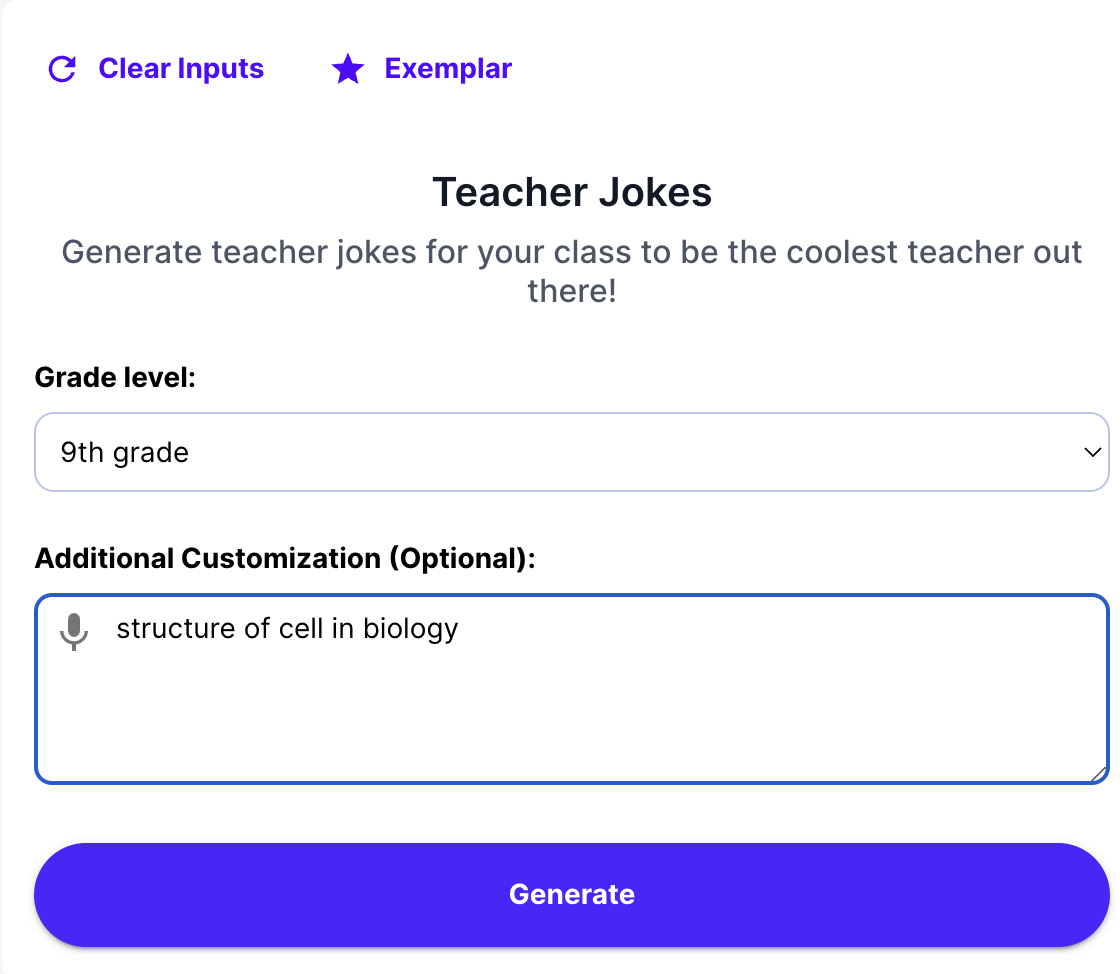
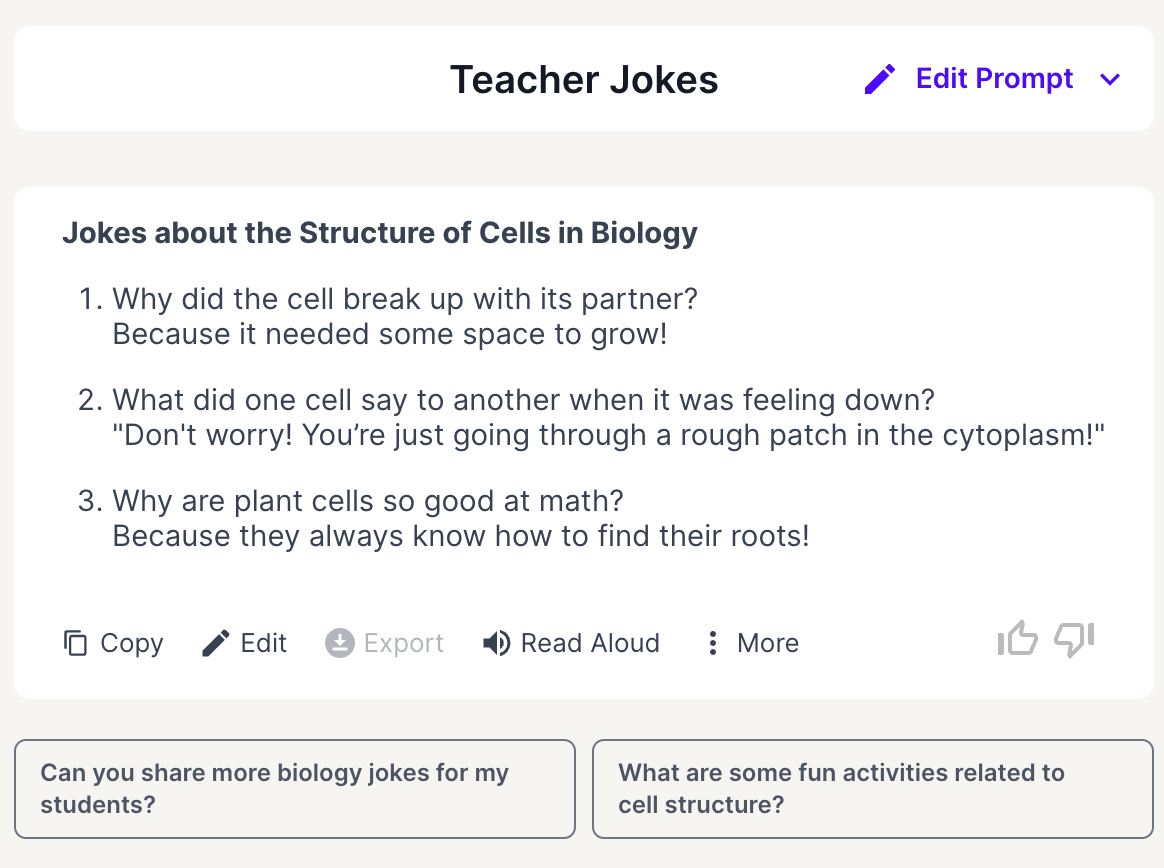
I will also share the issue of bias using my blog Teaching That AI Is Biased. Seeing the bias in images, I believe, helps teachers (and students) understand the problems of trusting AI implicitly.
Simple, one-issue examples are the plan. Diffit may help a teacher create a differentiation plan for their class, while another teacher may not be interested. That’s okay. We don’t all have the same classrooms or students. The key is to keep trying new things.
References:
Hollands, F., & Breazeal, C. (2024). Establishing AI Literacy before Adopting AI. Science Teacher, 91(2), 35–42. https://doi.org/10.1080/00368555.2024.2308316
National Science Foundation (2024). The Artificial Intelligence (AI) for K-12 initiative (AI4K12). Retrieved on July 28, 2024 from https://ai4k12.org/.
Touretzky, D., Gardner-McCune, C., & Seehorn, D.. (2023). Machine Learning and the Five Big Ideas in AI. International journal of artificial intelligence in education, (). Retrieved from https://par.nsf.gov/biblio/10357450.
 Tickling Tech
This post really resonated with me! It reminds me of the approach we take in LETRS training, start with foundational understanding before jumping into application. Just like we teach the science behind how kids learn to read, we need to help teachers understand how AI works before expecting them to use it confidently in the classroom. I also love the idea of keeping it light with tools like MagicSchool.AI jokes, similar to how we use hands-on activities in LETRS to make the learning stick. Meeting teachers where they are is everything!
LikeLike
[…] AI: No Such Thing As a Free Lunch Incorporating AI into Instruction Training Teachers to Use AI AI Policy Considerations in a School Library? Accessibility with AI Guiding Students in […]
LikeLike