EOY26 The Year of Supporting Each Other
Leave a commentMay 24, 2026 by Dr. Robbie Barber
What is an end of year report for a school-based position? In short, it should be an opportunity to show off. You can display a long list of what you accomplished. You can share specific examples. You can provide data in graphs and charts. You can even provide a check list of your daily routine to show how much you cover in a day, week, or month. Often, those of us creating end of year reports work for people who do not understand the full extent of the job we do. If they don’t, it becomes part of our role to help them understanding. Not bludgeon them over the head, but instead provide information that emphasizes helping that person with their position.
As a school librarian, a.k.a. teacher-librarian/ media specialist/ tech goddess, I report directly to my principal. My principal knows that he can rely on the Media Center running smoothly, but he may not know the intricacies of work being done. In fact, one year he remarked on my review that I needed to share more with my teachers. He did not know that I send monthly resource supports to different departments based on their upcoming needs. I don’t copy him on those emails – he wouldn’t want me to either. I just hadn’t told him.
Data helps and I send some data at the midyear point for him to include in his monthly reports. Since I’m a librarian, everyone wants to know our checkout statistics. (It’s literally the least of all our work but it is the one most people are familiar with.) We check out physical books, e-books, e-audiobooks, and now e-magazines. The increase in three years was over 283%.
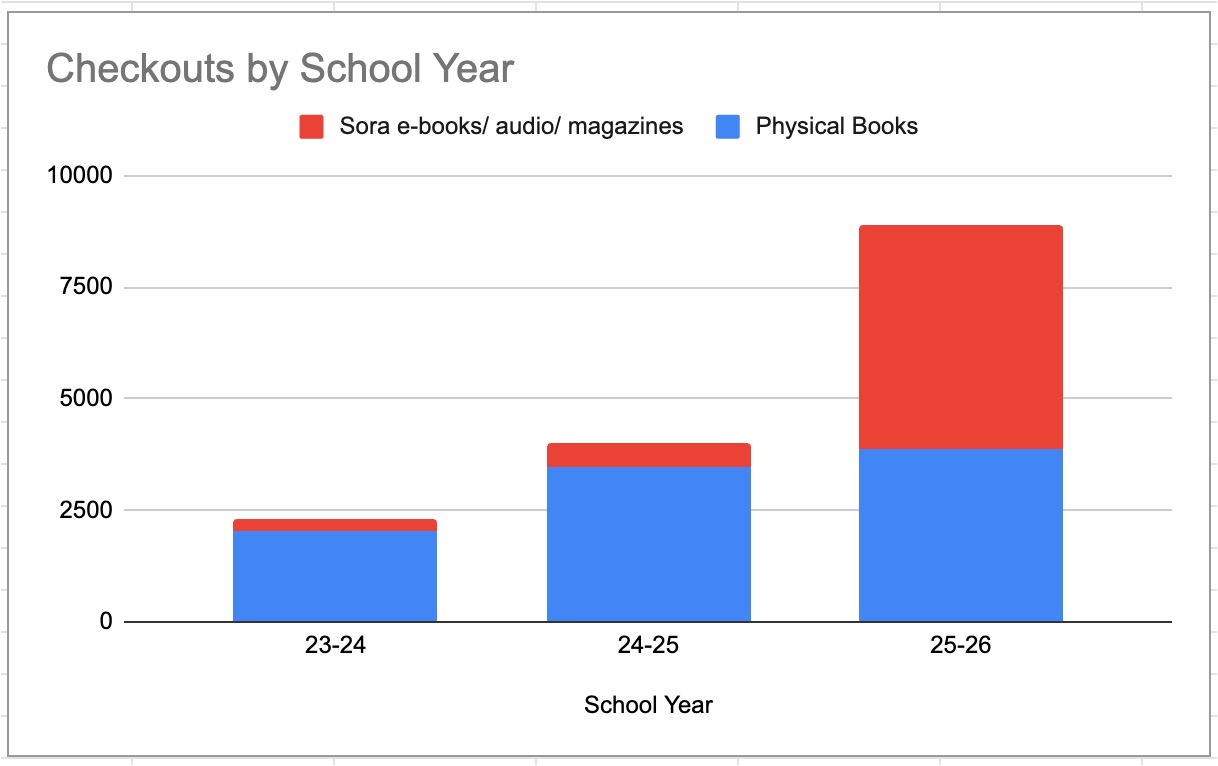
This is an incredible statistic. But as an engineer, I always question numbers and outliers. When I dug into the data, I found that one student had found the e-magazines and checked out multiple ones each day of the school year. This one student checked out over 4,000 magazines throughout the school year.
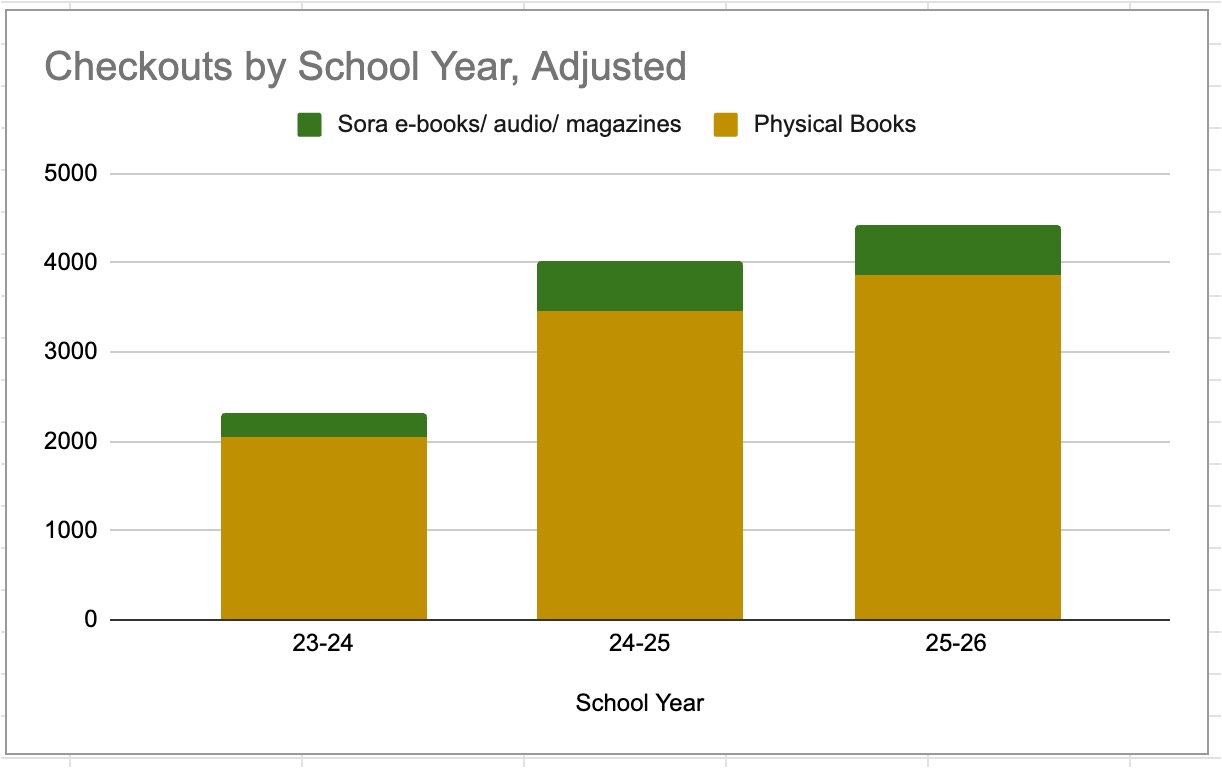
When I remove e-magazines completely, the numbers look different. It’s still a 91% increase, which is huge! However, taking out the e-magazines isn’t really fair either. That one student showed remarkable literacy growth in one year. The level of the initial magazines were elementary school, but they grew in levels and complexity as the school year went on. It’s less about lying with statistics and more about understanding the nuances underlying them.
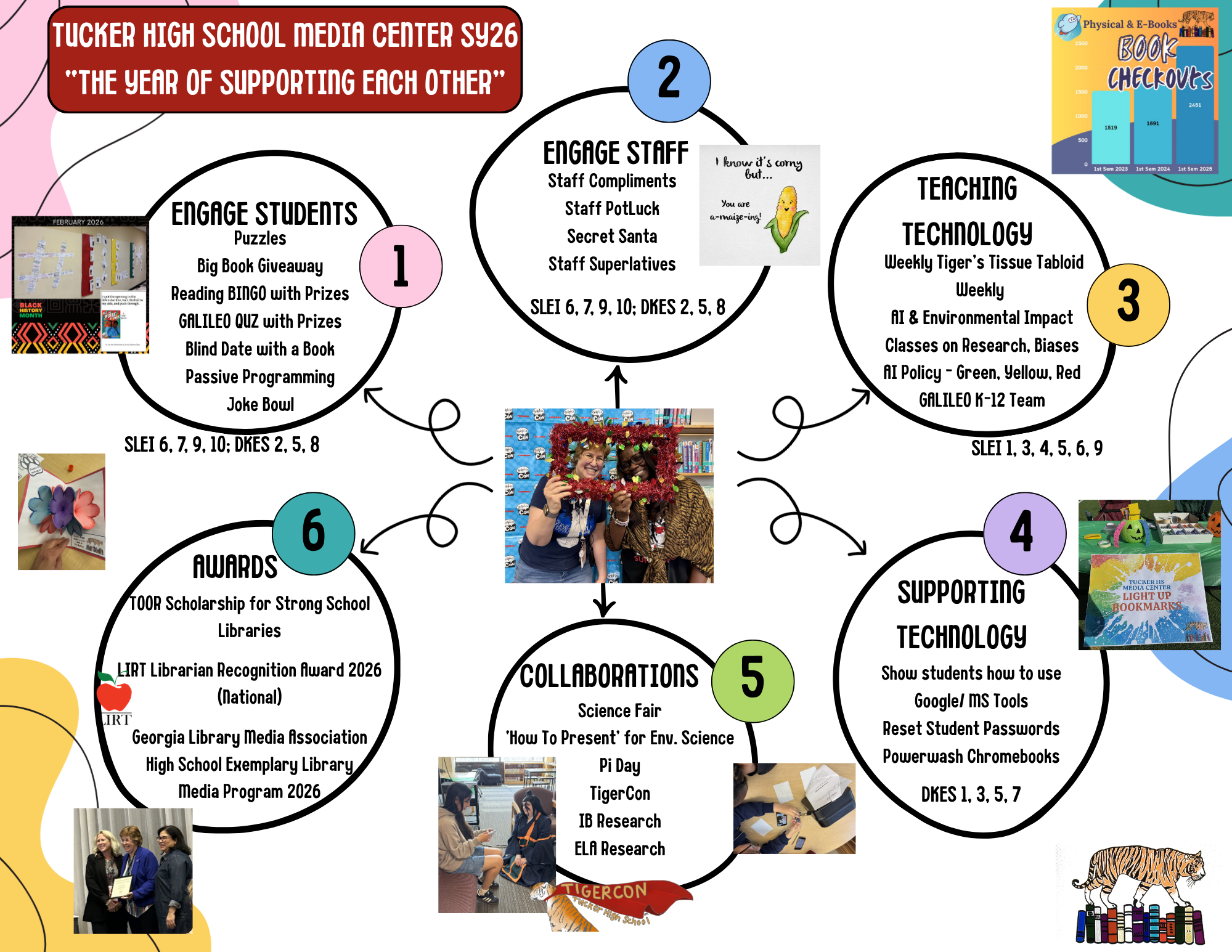
This school year, there were some major personal issues that affected both my aide and myself. Back in 2020, I started giving names to the school years. This year, we agreed that we were supporting each other. As I often do, I created a one-pager for my EOY Report. The first two sections are about our first SMART goal. This year, my aide and I had the same first SMART goal. It states: “To engage staff and students in school-wide activities and programs to build community through May 1, 2026.”
My second SMART goal was: “To provide instruction to teachers and students related to artificial intelligence, research, and technology through May 1, 2026” which is reflected in the third section. The fourth section reflects my aides goal of assisting students and staff with technology. The last two sections highlight collaborations and awards.
Under sections 1-4, we added notations associated with how we are evaluated. SLEI notation refers to the School Librarian Evaluation Instrument developed by the Georgia Library Media Association. DKES is the program that is used to evaluate library media assistants, parapros, secretaries, and similar positions.
What did you do this year?

